
🗺️I Mapped College Freshman Ego Development (Shocking) Part 1
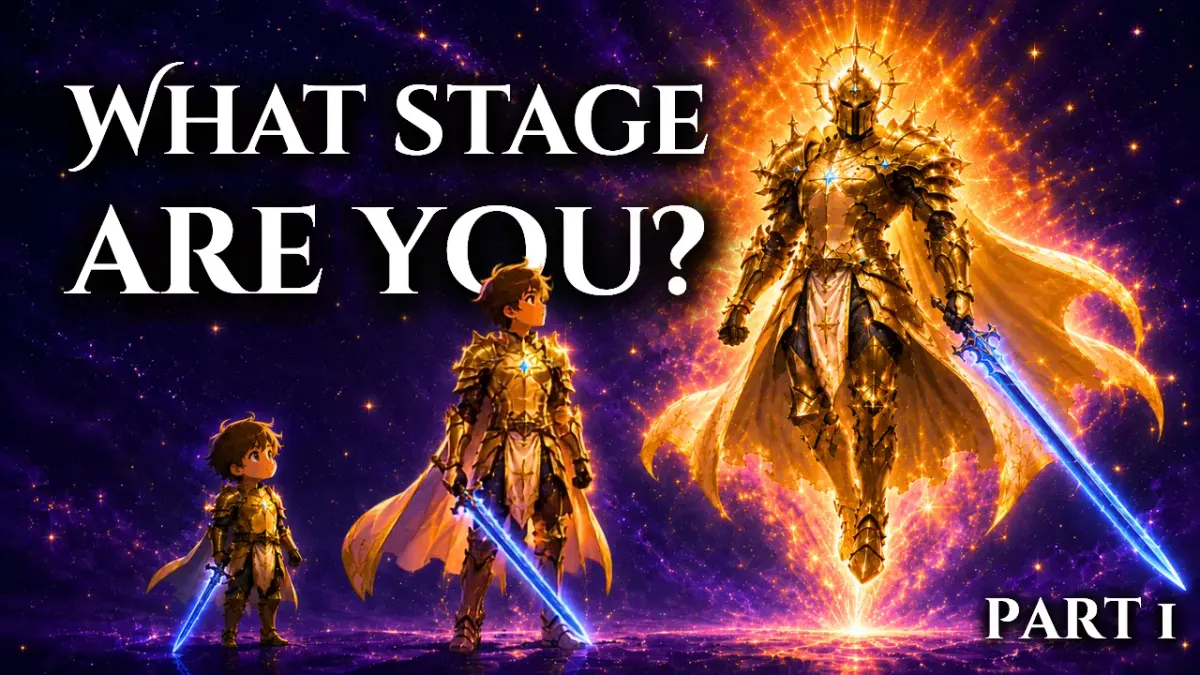
College promises a lot: A profitable career. Friends. Learning. Happiness. Love. Purpose. A suspicious relationship with iced coffee.
But no one tells you how those things actually emerge or why doing everything “right” can still leave you feeling empty. So most students are left to navigate the college maze with a broken compass, confused and lost to what growth even means.
It turns out, human development follows predictable patterns.
That's why I mapped all elite college freshman ego development through five stages of pursuing deeper success, happiness, and love. I call it The Conscious College Journey. It's made from conversations with 50+ students and the integration of three of the most complex human development theories ever made: Cook-Greuter's 9 Stages of Ego Development, Wilber's Integral Theory, and Graves' Spiral Dynamics.
Yes, I know I just threw three giant theories at you. Don't worry, I'm not making you read all of them. I did the suffering so you don't have to.
This is the seven stage map I wish I had when I came to Cornell University five years ago. By locating yourself throughout the five stages, you can scaffold your growth toward the next in half if not a fifth the time it normally takes. That or they might make you cry in the shower. Hopefully both.
How Should You Use The Conscious College Journey?
This map isn’t something you win. It’s something you orient with.
Start by locating the stage you’re most grounded in right now — not the one you admire, aspire to, or intellectually understand, but the one your daily behavior actually reflects.
Next, look backward before you look forward. Most struggles in college don’t come from being “behind” — they come from unintegrated shadows from earlier stages. Notice which patterns still sneak in under stress, and choose one small, concrete action over the next few weeks that helps you grow toward the next stage. Growth happens through practice, not insight alone.
Send this to a friend. Talk about it. Map each other — not to label or diagnose, but to build mutual understanding and compassion.
A few principles to keep in mind as you use the map:
- This journey is dimensional, not categorical. You’re usually grounded in one stage and nine different developmental lines while expressing parts of the stage below — and occasionally touching the stage above. That means you might be highly developed cognitively and poorly developed emotionally.
- Every stage is necessary for development. To get to a stage you must transcend and integrate the stages below it. Period. Each one solves real problems at its time. Every stage includes aspects of the earlier stages. Therefore, no stage is better or worse in an Absolute sense, just more holistic and integrated.
- Every stage includes light aspects and shadow opposites. Each stage has a "healthy" formation as well as "unhealthy" formation. Unhealthy formation comes from over attachment through addiction or allergy to aspects of that stage. When growing to the next stage, unintegrated shadows can come from below or trickle down from above.
- This isn't the Olympic 100 meter dash and you aren't Usain Bolt. Trying to rush stages often creates the very suffering you’re trying to escape. Take your time. Development unfolds at the speed of integration.
Use this map to become more honest, more patient, and more loving—with yourself and with others. That’s the real point.
Tier 1: Self-Authoring
The first three, Tier 1 stages of college ego development are defined by their self-authoring nature. The ego has not yet fully come into itself yet and therefore much effort is put on building one's values, personality, skills, relationships, and purpose. Tier 1 is where the self is building its character sheet. This is in contrast to Tier 2 and Tier 3 structures which focus on deconstructing the self and then transcending it.
Stage 1: Cosmic Follower (Amber)
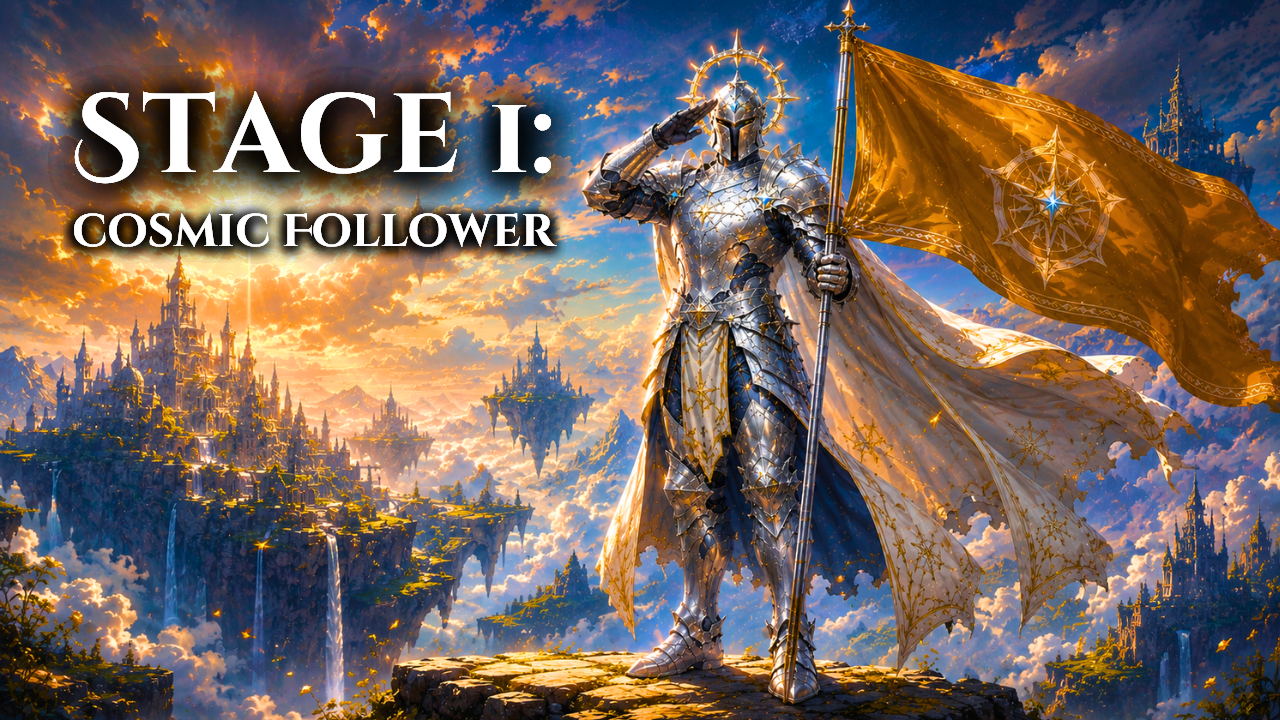
Summary: The Cosmic Follower is learning how to belong. Their self is capable of 1st and 2nd person thinking but struggles with 3rd. A pre-modern worldview. They are conformist, identifying with groups, institutions, ideologies, and roles which can make them deeply structured, loyal, and dependable on one end, and rigid, lonely, and self-righteous on the other. They move through college by aligning with what feels safe, approved, and validated often sticking closer to those in their in-group and avoiding the out-group.
Potential Examples:
- Rigid friend groups
- Frats and sororities
- Athletic teams
Self-Other Boundary: Self is differentiated between 1st and 2nd person, letting them move between their perspective and another. But it's difficult for them to take a 3rd person perspective.
Light Side:
- Loyal, reliable, and willing to sacrifice for the group
- Can follow structure, routines, and expectations well
- Shared values, traditions, and collective identity
Shadow Side:
- Judges out-group and overly defends in-group
- Loses self inside groups, ideologies, or roles
- Rigid, lonely, and self-righteous
Questions They're Asking:
- How can I deepen connection with my in-group?
- What is everyone else doing?
- Why do I feel so inauthentic?
Needs Development:
- Focused on safety and connection
- Represses higher growth needs to conform
- “Dreams are for after finals.”
- Responsibility to fulfill needs often put on others
Physical Development:
- Almost non-existent connection to body
- Uses distraction, routines, or substances to avoid bodily signals
- “If I stay busy enough, I won’t have to feel that weird chest thing.”
- Disconnected from rest, intuition, and somatic feedback
Emotional Development:
- Emotions are a jungle and can hold truths that cloud the truth — or opposite end, trusting emotions and intuition way too much
- Emotions one feels are tied to the external event, shedding responsibility
Motivational Development:
- CD5 (Social Influence & Relatedness): Primary driver — fitting in, approval, loyalty
- CD1 (Epic Meaning & Calling): Borrowed purpose through club, team, nation, religion, ideology, or cause
- CD8 (Loss & Avoidance): Fear of exclusion, shame, or being wrong
Cognitive Development:
- Can analyze and draw rule based connections between things. Struggles to evaluate using a 3rd person perspective outside of the box of their in-group (Spiral Knowing Arcs 1-4)
- Sees Truth as what aligns with their in-group and authority figures (Truth Compass)
- Black and white, literal thinking
- “Hell is physically real and it’s called: group projects.”
- "People in that major always work too hard"
- "This is how you should study"
Social Development:
- Great emphasis on outward appearance, who you hang out with, and what you do with them
- Bonds through shared enemies, beliefs, or rituals
- “We hate that dining hall.” (while eating there daily)
- Relationships are role-based, conflict averse, and conforming
- “This is my ‘gym friend.’ This is my ‘study friend.’ This is my ‘existential dread friend.’”
Moral Development:
- Ethnocentric, my club/nation/race
- Value authority, loyalty, and purity a lot
Aesthetic Development:
- Aesthetics used as identity signals rather than expression
- Rebellion aesthetics still conform to subculture norms
Spiritual Development:
- Spirituality collapsed into religion, ideology, or nationalism
- “God is on our side.”
- Faith used for certainty and belonging rather than inquiry
- “Doubt is a sin.”
- Spiritual bypassing of doubt, complexity, and inner work
Stage 2: Cosmic Climber (Orange)
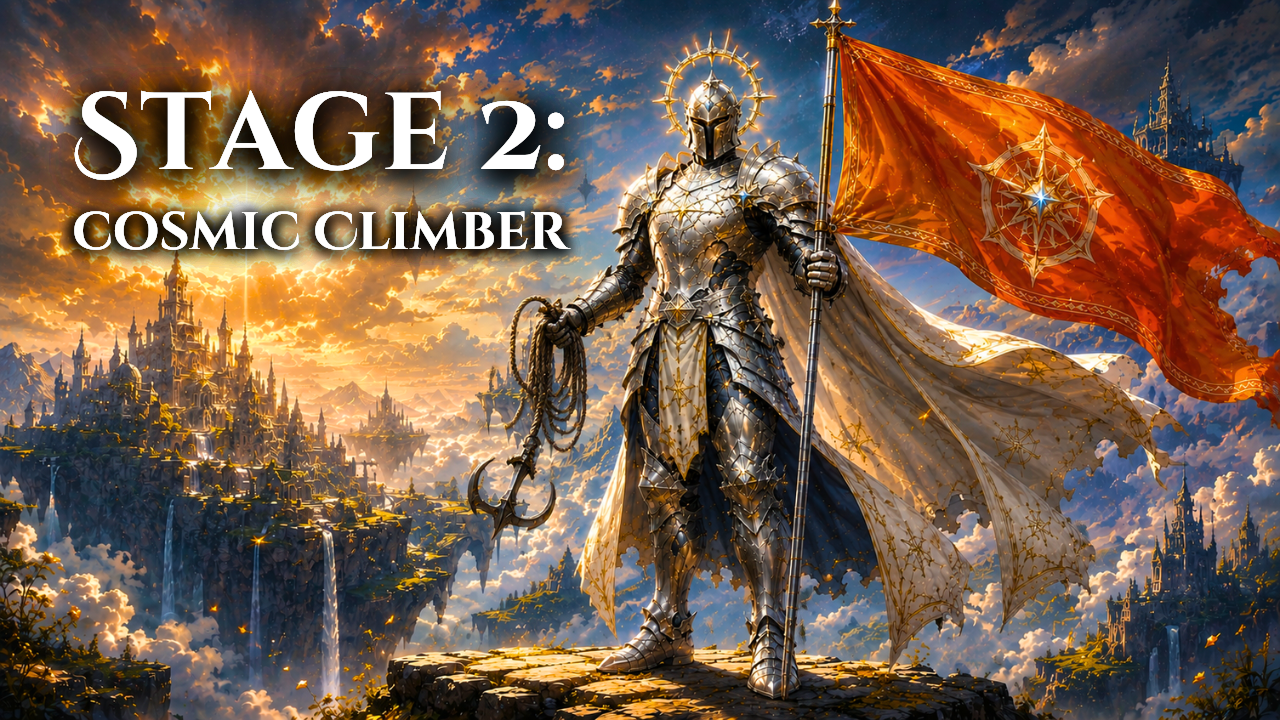
Summary: The Cosmic Climber has stepped out of the collective orbit and begun authoring their own path. Their self is identified with independence, competence, and the beginnings of self-improvement, using college as a proving ground for identity, skill, and external metrics of success. They are capable of more complex 3rd person perspective taking, and formalized abstract thinking, but still struggle to prioritize between these options. A modern worldview. Their new self is scared of returning to being a Cosmic Follower and thus often takes feedback personally. There is little appreciation for systemic meta-thinking, the connecting of mind and heart, and the multiplicity of perspectives.
Potential Examples:
- Pre-professional tracks: Pre-med, pre-law, finance, consulting, tech pipelines
- Startup/hustle culture students: Running clubs, side projects, personal brands
- Honors programs & competitive majors: Students differentiating themselves through rigor and achievement
Self-Other Boundary: Self is capable of taking a 3rd person perspective on 1st and 2nd person, but they mostly still frame advice and thinking from their own perspective. Modern worldview.
Light Side:
- Drive toward competence, success, and independence
- Willing to question norms, traditions, and inherited beliefs
- In relationships, values authenticity, vibing, and personal agency
Shadow Side:
- Overly independent — lonely lone wolf
- Overvaluing of external metrics of success
- Relationships become instrumental or shallow
Questions They’re Asking:
- Are my friends really the right people I should be spending my time with?
- How can I improve my skills, productivity, and resume?
- Why do I feel exhausted, anxious, or empty despite “doing everything right”?
Needs Development:
- Primarily focused on self-esteem
- Still puts some responsibility for needs fulfillment on others
Physical Development:
- Sleep, nutrition, and movement sacrificed for goals
- "If you haven't pulled an all-weeker than you aren't really trying."
- Flip side, beginning of self-improvement in health
Emotional Development:
- Still mistakes emotions as externally rooted rather than internally
- Often use negative emotions as fuel
- Anxiety, resentment, restlessness, sadness, anger, etc.
- Values left brain thinking over right brain feeling
Motivational Development:
- Value black hat left brain (non-agentic extrinsic motivation) more than white hat, right brain (agentic intrinsic motivation)
- CD2 (Development & Accomplishment):
- Starting to tap into practically oriented self-improvement
- Focused on doing the task right, rather than the right task
- CD4 (Ownership & Possession):
- Grade focused to set oneself up for a good career
- CD5 (Social Influence & Relatedness):
- Stuck in middle between reliance on others and validation of own self
- Mostly seek friends they vibe with, have similar interests, and are driven, rather than deeper aspects of friendship
Cognitive Development:
- Capable of formal evaluative reasoning (Spiral Knowing Arcs 1-5)
- Sees truth as scientific, logical, and rational (Truth Compass)
- Overvaluing of representational and practical knowing compared to more ephemeral participatory
Social Development:
- Relationships centered on shared goals, interests, or ambition — you vibe with this person
- Conflict handled through debate or withdrawal rather than dialogue
- Trends towards advice rather than holding others emotions
- Immediately offering solutions when someone shares pain
Moral Development:
- Nationalist & Worldcentric (Doesn’t include evil people or animals)
- Questions authority selectively (professors, parents, institutions)
- Individualistic and merit-based worldview
Aesthetic Development:
- Beauty found in external representation of things and less so in internal landscape
- Personal style used to signal individuality and competence
- Beauty appreciated, but often more in a sensory sensory sense and still secondary to function, engagement, and enjoyment
- "This art looks or feels great and therefore it is great."
Spiritual Development:
- Skeptical of traditional religion
- Faith seen as intellectually naive or emotionally compensatory
- Spirituality reframed as mindset, performance aid, or stress reduction
- Meditation to focus better
- Truth seen as something to figure out, not yet something to become
Stage 3: Cosmic Weaver (Green)
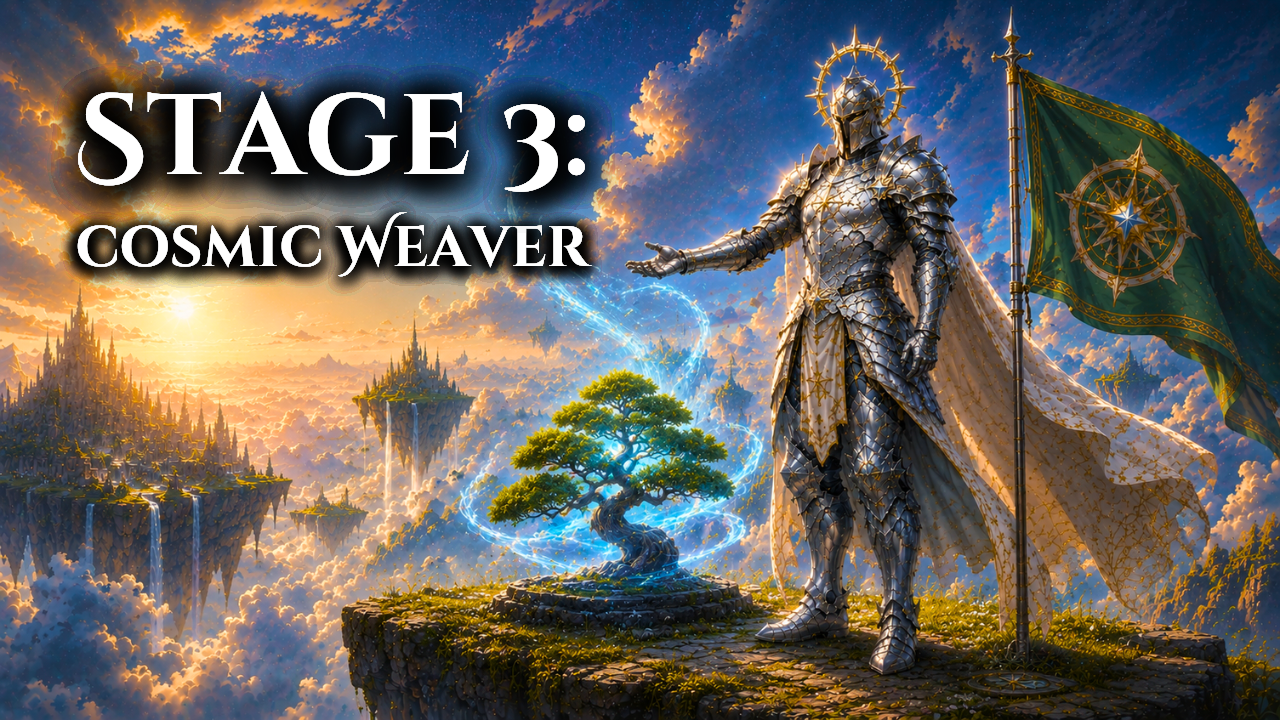
Summary: The Cosmic Weaver is consciously authoring their individual life. They're no longer identified with traditional external metrics of success — they're designing a coherent identity, value system, and long-term trajectory by understanding their past and planning their future. They're beginning to adopt a fourth person perspective, able to appreciate the relative perspectival nature of reality. There is the beginning appreciation for systemic influences, intersectionality, sociocultural and epistemological relativism, and the value of care, fairness, and liberty over authority, loyalty, and purity. College becomes a platform for growth, relationships, and competence, though self-improvement still takes the cake over self-actualization and transcendence.
Potential Examples:
- Students curating their course load: Choosing classes based on learning value, not just prestige or difficulty signaling
- Mentors/peer advisors: Who help others clarify goals without imposing their own
Self-Other Boundary: Beginning to adopt a 4th person perspective on 1st, 2nd, and 3rd person perspectives. They can appreciate the relative perspectival nature of reality. Post-modern worldview.
Light Side:
- Beginning understanding of systemic inequity, collective crisis, and intersectionality
- Strong sense of personal values and chosen direction
- Genuine interest in growth, psychology, and self-understanding
Shadow Side:
- Too airy fairy, emotional, and interdependent
- Chronic self-pressure and guilt for not living up to potential
- Subtle superiority or judgment toward less “developed” others
Questions They’re Asking:
- How can I find and build relationships based on value, growth, and authenticity?
- Why do so many people act the way they do despite seeing how much it's hurting them?
- How can I understand myself better to grow?
Needs Development:
- Ebbing into growth needs of exploration, love, and purpose rather than just deficiency
- Still put some responsibility of needs fulfillment on others but much more on one self
Physical Development:
- More of an emphasis on internal aspects of body rather than just external
- “I can tell my nervous system is dysregulated because I just reread the same sentence six times”
- Becoming more interested in mindfulness, meditation, and other reflective/contemplative practices (still primarily practical)
- Starting to become open to intuition, imagination, visualization, and other more subtle forms of consciousness
Emotional Development:
- More of an internal rooting of emotions rather than external
- Interested in the psychology of self and others
- Accidentally psychoanalyzing friends mid-conversation
Motivational Development:
- Beginning to value white hat, right brain (agentic intrinsic motivation) more than black hat left brain (non-agentic extrinsic motivation)
- CD2 (Development & Accomplishment): Mix of true development and conventional accomplishment
- "I've mastered the art of getting good grades AND learning"
- CD3 (Empowerment of Creativity & Feedback): Cares more about authenticity and creating things
- "I never knew drawing could be so fun compared to engineering"
- CD5 (Social Influence & Feedback): Wants value based character friendships
Cognitive Development:
- Beginning to care about participatory knowing and creation rather than just representational and practical (Spiral Knowing Arcs 1-6)
- Sees truth as not just scientific, logical, and rational, but emotional as well. Still not very meta-systemic or holistic. (Truth Compass)
- Beginning to think in a meta manner about some things (Meta-hexagon)
Social Development:
- Relationships chosen intentionally rather than by proximity
- "Those first semester friends don't resonate with me anymore"
- Starting to peer into emotional world of friends, listen more, and ask better questions
- Values honesty, growth, and shared values
Moral Development:
- Worldcentric (Includes animals and "evil people")
- Deeper questioning of societal norms, systems, and incentives
- Growing sense of responsibility toward others'
Aesthetic Development:
- Aesthetics reflect individual/collective identity and internal landscapes rather than just external competence
- Style becomes an expression of values rather than rebellion
Spiritual Development:
- Drawn to contemplative practices, philosophy, or wisdom traditions for a mix of practical and psychological purposes
- Still approaches spirituality through conceptual understanding rather than becoming
- Still focused on building self up rather then breaking it down
Wrapping Up Tier 1
The Tier 1 stages—Cosmic Follower, Cosmic Climber, and Cosmic Weaver—are all about authoring a self.
First, you learn how to belong. Then, you learn how to succeed. Then, you learn how to choose. College, at this level, is a proving ground for identity—values, skills, relationships, ambition, and meaning. You’re building a character sheet and stress-testing it against reality. This work matters. You can’t transcend a self you haven’t actually built.
But there’s a quiet tension running through all three stages. Even as you become more independent, intentional, and self-aware, the self still feels heavy to carry. Success doesn’t fully satisfy. Meaning still feels conditional. And no matter how well-designed your life becomes, it still feels like something you have to maintain.
That friction isn’t failure. It’s developmental.
Tier 1 asks: Who am I, and how do I build a good life? Eventually, another question starts whispering underneath it: What is this self I’ve been building—and why does it still feel fragile?
That question is the doorway to Tier 2.
In Part 2, we move into the self-deconstruction stages—Cosmic Systematist and Cosmic Wizard—where college stops being something to win and starts becoming something to see through individually and collectively.

If you found this post interesting you would love my free College Freshman Cosmic Journaling Kit (CJK). ✨📚
It's a gamified journaling system that helps you grow your emotional intelligence, self-understanding, and purpose with over 1,000+ journaling questions and 5+ templates in just 15 minutes a day.