
😬Why Is Relaxation So Hard For College Freshmen?
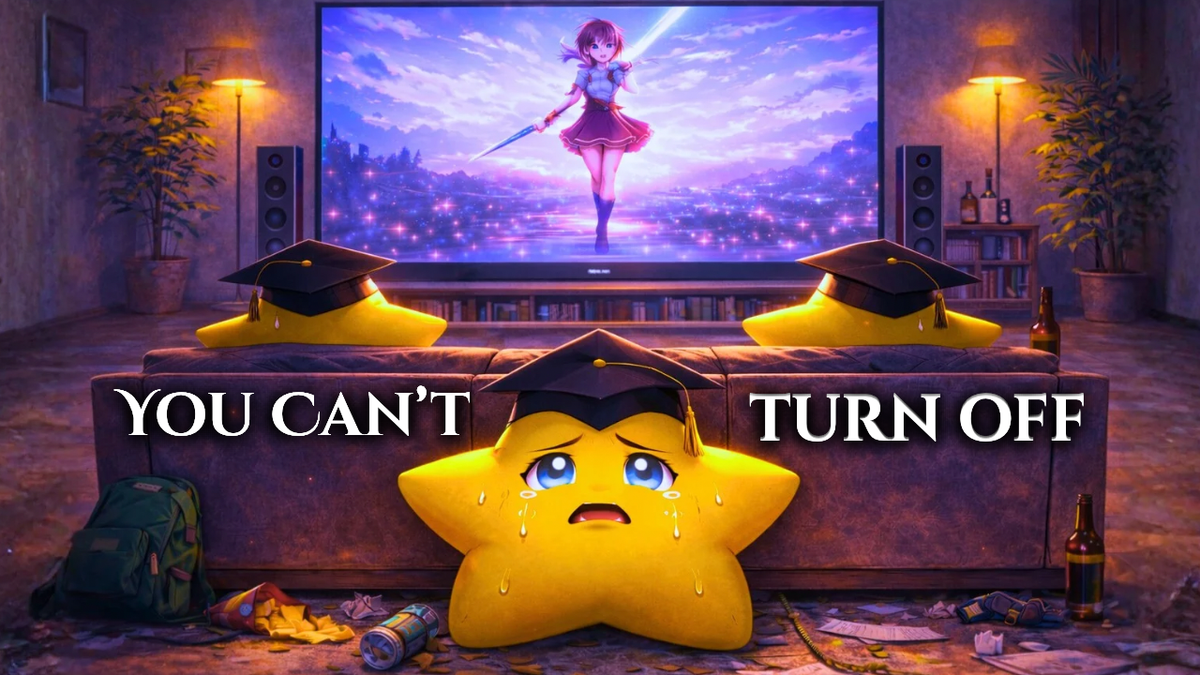
Why the hell is it so hard to relax in college?
You've earned your spot at a place that costs more than most people's houses. You have a coffee in your hand, a friend across the table, and a series on your laptop. Everything, objectively, should be fine. And yet there it is — the Mario Kart race happening just behind your sternum, the quiet insistence that you should probably be doing something else right now.
You are technically relaxing.
You are not relaxing.
I spent all four years at Cornell University trying to crack this. Not because I was unusually anxious but because I couldn't make sense of the gap. Here I was, doing the things people do to unwind, and feeling weirdly worse for it. Like eating a meal and leaving the table hungrier.
What I eventually discovered is that most students are trying to solve an internal problem with an external answer. They're pointing at the wrong thing entirely. The question isn't which activity will finally relax you. It's why you can't seem to be in any activity at all.
Here's the thing: relaxation isn't an activity. It's a relationship.
It's the difference between watching a sunset and mentally scheduling the next hour while a sunset happens in front of you. Same event. Entirely different experience.
I call the version where you can engage in an activity, for the activity, conscious relaxation. And learning it might be the most quietly radical thing you do in college. Not because it's a productivity hack. But because it will change what you think you're even trying to do here.
Why Is Conscious Relaxation So Hard To Do?
The reason conscious relaxation is so hard stems from three main problems:
- Our false selves are defined by doing
- We think of relaxation as external rather than internal
- We don't want to relax more
Let's explore each before we can learn how we can consciously relax more.
Problem 1: Our False Selves Are Defined By Doing
The root of difficulty relaxing isn't your exam schedule, your roommate, or the dining hall "food."
It's the self.
To even get into an elite college, most of us were forced to build an identity around achievement, hard work, and comparison. We constructed, brick by brick, a self that does. This isn't inherently bad. It got us here. We should approach this false self with compassion, even gratitude.
The challenges arise when we survive this false self unconsciously.
Self-survival, in this context, means the subtle and not-so-subtle ways we keep doing at the center of our identity, even when we're supposedly not doing anything. The unconscious insistence that our worth is something we produce, not something we are. That we are, at our core, human doings who occasionally malfunction into human beings.
This is what makes relaxing so strangely exhausting.
Some of us instrumentalize everything. Meditation becomes stress reduction. Journaling becomes emotional triage. Friendships become, God help us, networking. Being activities get conscripted into the army of doing before they even have a chance to breathe.
Others go the opposite direction by turning relaxation into procrastination. You open Netflix not because you want to watch something but because you are fleeing. And somewhere around episode three, the show you were barely enjoying starts to feel like a character flaw. The relaxing activity becomes another thing to feel bad about. Congratulations: you have achieved anxious leisure.
Both are the false self at work, pulling the strings.
What we're really avoiding, underneath all of it, is contact with something deeper. What I call the True Self — capital S, not to be pretentious, but because it genuinely is a different order of thing. The True Self doesn't reject the false self. It holds it, the way a river holds a stone, and slowly, over time, smoothes its jagged edges down. Rooted there, you feel calm, creative, courageous, more like someone who actually chose to be in the room they're sitting in.
I call the movement toward this the Conscious College Journey, and it's the map my entire channel is built around. But I won't pretend the road there is comfortable. It isn't. Because your false self, that industrious little architect of your GPA and LinkedIn profile, does not want to change. Change feels like death. In some ways it is — the old self dissolving to make room for something newer, quieter, and more genuinely yours.
So when you sit down to watch something and your chest fills with a diffuse, unnameable dread? That's not a personal failing. That's the false self doing what it was built to do — keeping you productive, keeping you striving, keeping you safe in the only way it knows how.
Which, once you see it, makes the restlessness feel a little less like a flaw and a little more like a letter from a very anxious friend who loves you and has absolutely no idea when to shut up. This connects neatly with the second problem.
Problem 2: We Think Of Relaxation As External Rather Than Internal
We assume if we do a relaxing activity, then it should be relaxing. Playing video games is relaxing. Talking to friends is relaxing. Vacation is relaxing. With this mindset, we believe our relaxation problems stem either from not being able to do more of these things, or doing so much of them it’s procrastination and makes relaxing stressful.
The mistake is thinking relaxation comes from the activity.
Conscious relaxation is rooted internally, not externally.
Video games are not inherently relaxing. Force someone to play Stardew Valley at gunpoint and I promise you they will not find inner peace tending their pixelated turnips. It’s the playfulness we bring to video games that makes them feel like play.
Talking to friends is not inherently relaxing either — we’ve all had conversations that left us more depleted than a problem set. It’s curiosity about another person, genuine interest in their inner world, that makes a conversation feel like rest rather than labor.
And vacation. Don’t get me started on vacation. Go to any tourist trap in peak July and behold an entire ecosystem of miserable families who have successfully outsourced their unhappiness to a more scenic location.
There’s nothing wrong with any of these things. Stardew valley is lovely. Friends are cool. Fridays are objectively the best day. I have personally cancelled plans for a television show and I would do it again. But if the internal relationship doesn’t change, the external upgrade just moves the problem to a nicer location. You’ll be sitting on a beach in Mexico, margarita in hand, ocean doing its whole majestic thing in front of you, and somewhere just behind your solar plexus, the familiar hum.
Because the beach didn’t fix it.
You came to the beach, false self and all.
What unifies conscious relaxation is not the activity: It's our internal relationship to the activity.
When we mistake relaxation as an external problem, we foolishly prioritize external solutions.
Of course, I'm not saying you should abandon these external activities. As we'll explore in the action section, I want you to come to them with internal roots. Even so, you might not want to, which leads us to the third and last problem.
Problem 3: We Don't Want To Relax More
Ridiculous you might think. What do you mean I don't want to relax more? I thought it silly myself, until I asked what it actually takes to consciously relax.
True conscious relaxation means complete and utter acceptance of the present, without needing it to be any different. Radical acceptance.
In other words, radical self-love.
We can't accept the present for any meaningful period of time unless we love ourselves. Self-love is the root of being, the root of self-esteem, and the root of conscious relaxation.
The challenge is fully embracing self-love comes with another identity statement: We are enough as we are. And that. That is something many of us students struggle to face.
Most elite student false selves are built on a foundation of deficiency. Not consciously or course. Nobody sits down in ninth grade and decides to organize their entire identity around not being enough. But somewhere in the gauntlet of AP classes and college applications and the slow accumulation of evidence that your worth is something you perform rather than something you simply are, the belief calcifies: rest must be earned.
To change by embracing self-love would mean dying to this old self, which is terrifying.
Much of the reason I was so scared to consciously relax early in college was because I was such a productivity machine. At one point, I was taking a full course load, in four clubs, uploading weekly to a YT channel, podcast, and newsletter, while creating a video course with my business partner John Mavrick and navigating my first girlfriend. Relaxation felt like it would send the whole thing toppling down.
And I was right!
When I started consciously relaxing, I did become less ambitious. For a while at least. I got some Bs instead of As. I sat in the sun on a Tuesday afternoon doing nothing in particular. Then, what emerged was a different sort of ambition. An ambition fueled in the marriage between doing and being. An ambition which didn't sacrifice from my ability to relax alongside it. An ambition that allowed me to experience objects, relationships, classes without peering constantly through self-smog.
Imagine, a student simultaneously incredibly productive while also able to relax without anxiety. It's possible. Which begs the question...
How Can We Learn To Consciously Relax?
In many ways, learning to consciously relax is the art of selflessness.
I don't mean selflessness in the kumbayah, donate all your money to charity and give your homework answers to everyone sense. I mean learning to let go of your attachment to the false self which has defined doing at the core of its identity. As you root more and more of your self in simply being, rather than doing, you’ll be able to engage in any relaxation activity without being anxious all the time.
Warning. This could make you less ambitious. It could lessen your motivation for schoolwork or certain friendships that are fueled more negatively. It could change you in ways you don’t even know.
All of this is a normal part of rooting more in being rather than doing, and you might not be ready, which is totally okay.
If you are ready though, there are two main things you can do to consciously relax more.
Firstly, build your self-witnessing ability.
Root in the witness which experiences everything. This is the timeless being which has been aware of consciousness for your entire life. It’s what is watching you read these words but not that which does the reading.
As you get into your witness, build the somatic sense of what it feels like to be doing oriented, and what it feels like to be being oriented.
Understand what that is like in your body.
You’ll notice, you almost never are experiencing one or the other but rather a rich dialogue between the two. Added on to that, both of these states can be experienced more through pulling in or putting out energy.
Pulling in occurs through activities like watching television, reading a book, walking in nature. Putting out can happen through things like writing, drawing, or exercising. Sometimes pulling in can be turned into pushing out or vice versa depending on your internal relationship to the activity but for simplicity we’ll stick to these definitions.
We’re not trying to get rid of doing for being. That is it’s own trap. We’re trying to merge being and doing together, by navigating unhealthy doing.
Unhealthy doing when putting out makes you feel:
- A lack in the current moment
- Energized by negativity
- Shorter breadths
- Tighter jaw
- Tensed body
- Scattered thoughts and feelings
Or you can experience all of the above but in pulling in with more apathy, boredom, and less energy.
In contrast, healthy, selfless being merges doing and being together.
When putting out, it can make you feel:
- Complete in the moment
- Creative and courageous
- Energized by positivity
- Diaphragmatic breathing
- Relaxed body (even while exercising)
- Scattered yet controlled thoughts and feelings
When pulling in, it can make you feel everything above but in a more calm, tranquil manner.
The art of self-witnessing is building your awareness for all four of these states, and how they are embodied. Then, you do something radical: you accept whatever comes up, without judgement, without attachment.
That’s right, even if you experience anxiety during relaxation, you accept it. If you experience resistance to this acceptance, accept the resistance. You might not be ready to let go of that attachment yet, which you must accept.
It’s this self-witnessing ability that opens the way to the second part of conscious relaxation: journaling.
By journaling, I don't just mean talking about your day. That’s level 1 journaling. I mean reflecting on how things are affecting you and why they are affecting you that way. This is level 2 journaling.
Here’s some journaling questions you can ask to help with this. I recommend taking one you resonate with, and coming back to this over time as you are ready for more:
- Why is so much of your worth wrapped in doing and what do you fear would happen if you valued being more?
- What things do you do right now for the sake of the thing itself?
- How can you build or deepen a mix of taking in and putting out conscious relaxation activities in your college life?
- How might you be able to turn your non relaxing activities a little more into conscious relaxing activities?
- What normally collective activity can you do completely on your own, during a weekday?
- Watching a movie alone
- Playing video games alone
- Going to a restaurant alone
Don’t fall for the trap of making conscious relaxation something you try and build to consciously for. Otherwise it becomes another thing you’re doing. You have to let go of even the need for conscious relaxation to work out.
Doing these two things, paved the way for an incredible transformation.
Tranquil In College Chaos (Conclusion)
When I first started consciously relaxing, it was one of the more quietly devastating experiences of my life.
Not dramatically. Nobody was hospitalized. It was more like watching a very tall sandcastle you’d build for years get approached by waves, until one afternoon you look up and the whole thing is just wet sand.
The tower I’d built from content creation schedules, deep work blocks, and a truly unhinged relationship to my Google Calendar began losing structural integrity under the quiet pressure of self-love. For a while I overcorrected magnificently. I got Bs. I watched things on weekdays. I took walks with no productivity podcast playing, like a nineteenth century romantic poet who also had a YouTube channel.
It was disorienting.
What emerged on the other side wasn’t a lazier version of me.
Doing and being started weaving together rather than warring. Ordinary activities — classes I used to white-knuckle through, conversations I used to half-inhabit while mentally composing to-do lists — started carrying a different texture. Not perfectly.
But the ratio shifted. And that shift changed everything downstream.
You do not need to earn the right to exist in your own life. The life is happening now, in the imperfect, overcommitted, slightly chaotic present.
Conscious relaxation is just the art of occasionally remembering that and choosing, against every instinct your false self has carefully cultivated, to be here for it anyway.
Even on a Tuesday.
Especially on a Tuesday.

If you found this post interesting you would love my free College Freshman Cosmic Journaling Kit (CJK). ✨📚
It's a gamified journaling system that helps you grow your emotional intelligence, self-understanding, and purpose with over 1,000+ journaling questions in just 15 minutes a day.